Skip to content

White paper

Explain a problem and your solution with evidence, in the structure readers and buyers expect.

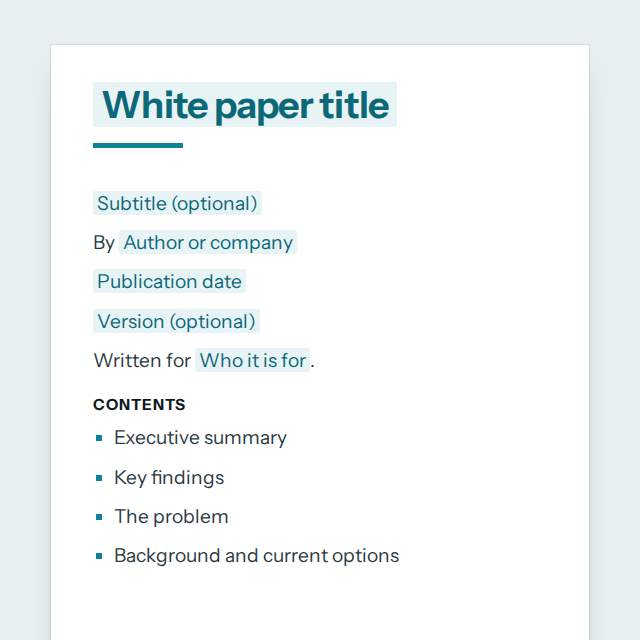
White paper template, first page

Fill it in and preview

Cutting Cold Chain Waste in Fresh Food Delivery

A practical guide for regional grocers

By Lindqvist Logistics Research
12 January 2027
Version 1.0

Written for operations managers at grocery and food distribution companies.

Contents

  1. Executive summary
  2. Key findings
  3. The problem
  4. Background and current options
  5. Our approach
  6. How the evidence was gathered
  7. Evidence and results
  8. Recommendations
  9. Conclusion and next step
  10. Terms explained
  11. Sources and about the author

Executive summary

Up to 12 percent of fresh food is lost between warehouse and shop. This paper explains where the losses happen and four changes that cut them without new vehicles.

Key findings

  • Spoilage is highest in the first 2 hours after loading
  • Three hubs cause 60 percent of temperature breaches
  • Sensors paid for themselves within 8 months

The problem

Temperature gaps during loading, long dwell times at hubs and unreliable manual logs cause most spoilage, yet few firms measure them.

Background and current options

Most grocers rely on paper checklists or fixed loggers that report only after delivery.

Our approach

Continuous sensors on each pallet, alerts at 2 degrees above target and a weekly review of the three slowest hubs.

How the evidence was gathered

Temperature data from 14 stores and 6 hubs between March and August 2026, compared with the same months a year earlier.

Evidence and results

  • A 14-store pilot cut spoilage from 9.8 percent to 5.1 percent in six months
  • Average hub dwell time fell by 38 minutes
  • Paper logs missed 31 percent of temperature breaches

Recommendations

  • Measure temperature at every handover
  • Set a maximum dwell time per hub
  • Review breaches weekly with the carrier

Conclusion

Spoilage is mostly a measurement problem. Firms that measure each handover can halve their losses within a year.

Next step

Book a free 30 minute review of your cold chain data at lindqvist.example/review

Terms explained

  • Dwell time: how long goods wait at a hub before moving on
  • Cold chain: the temperature controlled path from supplier to shop

Sources

  • FAO, Global Food Losses and Food Waste, 2011
  • Internal pilot data, Lindqvist Logistics, 2026

About Lindqvist Logistics Research

Lindqvist Logistics Research studies food supply chains for retailers across Europe and Africa.

Contact: research@lindqvist.example, +46 8 555 0142

Lindqvist Logistics sells cold chain monitoring. This paper is general information, not professional advice.

Templates are a careful starting point, not legal advice. Where the law matters, check what applies where you are.

Sales and marketing

What this template is for

A white paper template with the structure readers expect: executive summary, key findings, problem, method, evidence, recommendations and sources. Word or PDF.

It is free to fill in online, needs no account, and downloads as a Word document or a PDF. See all Sales and marketing templates

Sales and marketing

What you fill in

The form asks for 21 details. The document fills itself in as you type.

  • White paper title

    For example: Cutting Cold Chain Waste in Fresh Food Delivery

  • Subtitle (optional)optional

    For example: A practical guide for regional grocers

  • Author or company

    For example: Lindqvist Logistics Research

  • Publication date

    For example: 12 January 2027

  • Version (optional)optional

    Useful when you update the paper and readers need to know which one they hold.

    For example: Version 1.0

  • Who it is for

    For example: operations managers at grocery and food distribution companies

  • Executive summary

    Three to five sentences that a busy reader can stop at: the problem, the finding, the advice.

    For example: Up to 12 percent of fresh food is lost between warehouse and shop. This paper explains where the losses happen and four changes that cut them without new vehicles.

  • Key findings, one per line

    Three to five findings, each a single sentence with a number where you have one. Readers often read only this list and the summary.

    For example: Spoilage is highest in the first 2 hours after loading Three hubs cause 60 percent of temperature breaches Sensors paid for themselves within 8 months

  • The problem

    What goes wrong, who it affects and what it costs.

    For example: Temperature gaps during loading, long dwell times at hubs and unreliable manual logs cause most spoilage, yet few firms measure them.

  • Background and current options (optional)optional

    How the problem is handled today and why that falls short.

    For example: Most grocers rely on paper checklists or fixed loggers that report only after delivery.

  • Your approach or solution

    For example: Continuous sensors on each pallet, alerts at 2 degrees above target and a weekly review of the three slowest hubs.

  • How you gathered the evidence (optional)optional

    Sample size, period, data source and limits. This is what makes a white paper credible rather than an advert.

    For example: Temperature data from 14 stores and 6 hubs between March and August 2026, compared with the same months a year earlier.

  • Evidence and results, one per line

    Facts, numbers, studies. Name the source or the method for each.

    For example: A 14-store pilot cut spoilage from 9.8 percent to 5.1 percent in six months Average hub dwell time fell by 38 minutes Paper logs missed 31 percent of temperature breaches

  • Recommendations, one per line

    For example: Measure temperature at every handover Set a maximum dwell time per hub Review breaches weekly with the carrier

  • What should the reader do next?

    One clear action. Keep it modest: a white paper earns trust, it does not hard sell.

    For example: Book a free 30 minute review of your cold chain data at lindqvist.example/review

  • Terms explained, one per line (optional)optional

    For example: Dwell time: how long goods wait at a hub before moving on Cold chain: the temperature controlled path from supplier to shop

  • Disclosure or disclaimer (optional)optional

    Say if you sell what the paper recommends. Readers trust a paper that admits it.

    For example: Lindqvist Logistics sells cold chain monitoring. This paper is general information, not professional advice.

  • Conclusion

    For example: Spoilage is mostly a measurement problem. Firms that measure each handover can halve their losses within a year.

  • Sources, one per line (optional)optional

    For example: FAO, Global Food Losses and Food Waste, 2011 Internal pilot data, Lindqvist Logistics, 2026

  • About the author or company

    For example: Lindqvist Logistics Research studies food supply chains for retailers across Europe and Africa.

  • Contact

    For example: research@lindqvist.example, +46 8 555 0142

Sales and marketing

What is inside

The parts of this document, in order.

  1. 1Contents
  2. 2Executive summary
  3. 3Key findings
  4. 4The problem
  5. 5Background and current options
  6. 6Our approach
  7. 7How the evidence was gathered
  8. 8Evidence and results
  9. 9Recommendations
  10. 10Conclusion
  11. 11Next step
  12. 12Terms explained

Templates

How it works

  1. 01

    Fill in

    Type your details in the form. The document fills itself in as you type; click any gap to jump to its field.

  2. 02

    Check

    Read it through. Gaps you have not filled stay marked, so nothing goes out half done.

  3. 03

    Download

    Save it as a Word document to edit further, or as a PDF to send or print.

Make it yours with AI

Open it in the chat and ask for changes: shorter, firmer, another situation, another language.

Adapt it with nerix

Sales and marketing

Questions people ask

What details does this template ask for?

The form asks for 21 details, starting with White paper title, Author or company, Publication date, Who it is for, Executive summary. 7 more are optional.

Can I download this template as Word or PDF?

Yes. When you have filled in the form, save it as a Word document to keep editing, or as a PDF to send or print. It is free and needs no account.

Is what I type sent anywhere?

No. What you type stays in your browser while you fill in the document. It only goes to nerix if you choose to open the template in the chat.

What should I check before I use this template?

A white paper persuades with evidence, so every number needs a source you can name, and every claim about a competitor or a result must be true and current. Check any regulatory, medical or financial statements with someone qualified before you publish.

Are these marketing templates free?

Most are. Fill in and download them for free as Word or PDF, with no account. A few longer documents are premium: free to fill in, paid once to download, and marked with their price.

Do I need a customer's permission for a case study?

Yes. Get the customer's written approval of the text, the quotes and any logo before you publish. The case study template has a field for it.

Can nerix improve the wording?

Yes. Open the template in the nerix chat and ask for a shorter, warmer or more formal version, then check every fact before you publish.