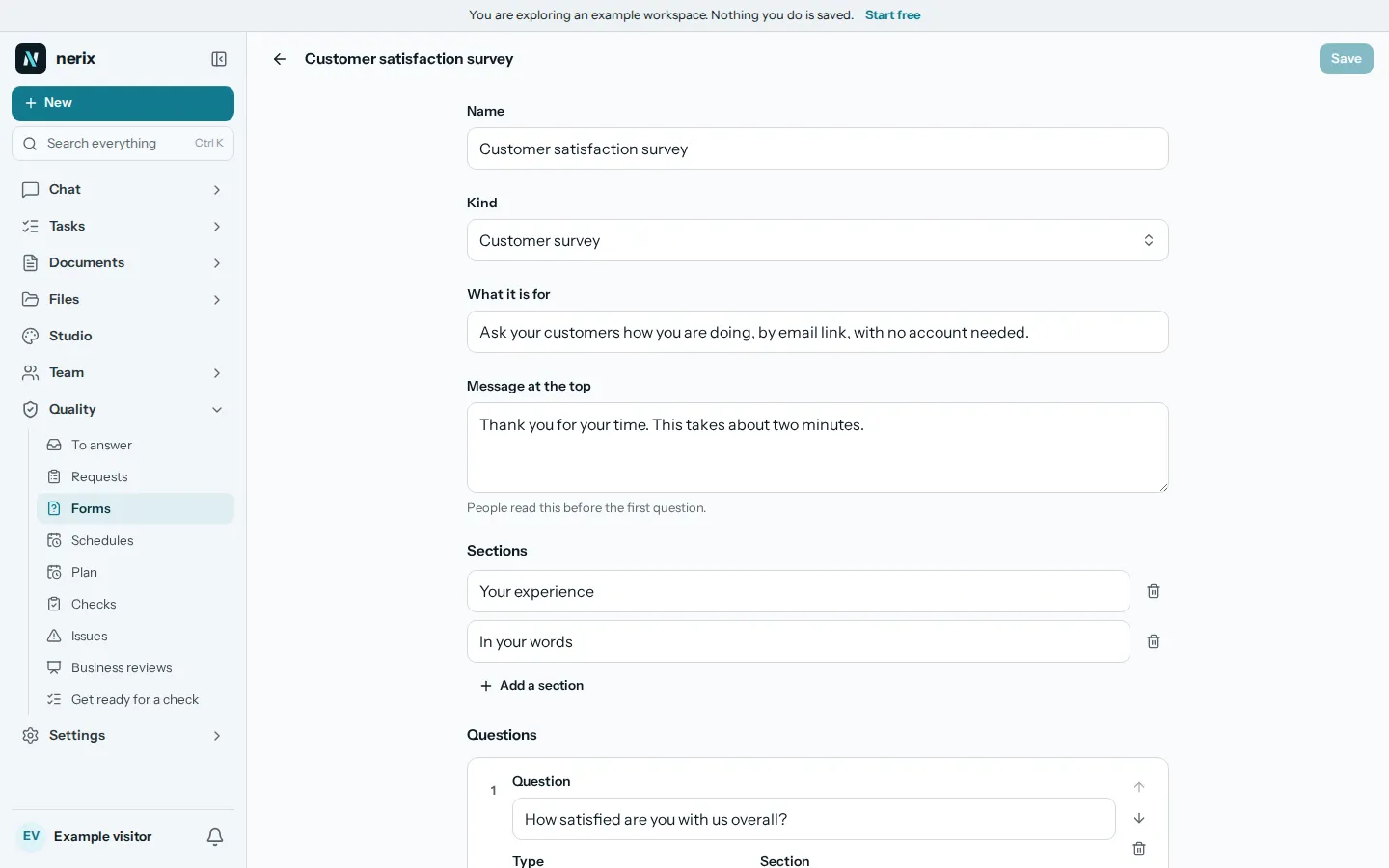
A performance review is a promise: the company will take an hour to think about you properly. When it is done well, people leave knowing what they do well, what to work on and what happens next. When it is done badly, it is a form, a rating nobody believes and a quiet loss of trust.
Small teams have an advantage. You know each other, so a review can be short and honest. What you need is a simple shape that you repeat, so it is fair from person to person.
Decide what the review is for
Pick one main purpose, and say it to everyone beforehand. Common purposes are to help the person grow, to agree on goals for the next period, to recognise good work and to decide pay or promotion. These pull in different directions. A review that tries to do everything in one hour usually does none of it well.
A workable split for a small team: a development review once or twice a year, a light monthly check in, and a separate conversation about pay. Tell people which is which.
Write down what good looks like
People cannot be fairly judged against something nobody wrote down. For each role, list four to six things that matter, in plain words, with an example of good work for each. "Handles customer complaints calmly and fixes the cause" is better than "good communication".
Share the list at the start of the period, not at the end. If you have job descriptions, use them; if you do not, write the list together in the first month.
Collect before you talk
Good reviews are mostly prepared. Gather, for each person:
- Their own view. A short self review: what went well, what was hard, what they want to learn.
- The manager's view. Examples, not adjectives. "Delivered the new price list two days early and answered every question from sales" is evidence. "Reliable" is a label.
- Others' views, if useful. Colleagues and people they serve can add things a manager does not see. Keep it to a few questions and a few people.
- Facts. Goals set last time and what happened to them.
Use the same questions for everyone in the same role. That is what makes the review fair, and it makes it easier to see patterns.
Questions that work
- What did you do this period that you are proud of?
- What was harder than it should have been?
- Where did you help others, and where did you need help?
- What do you want to learn in the next six months?
- What should we start, stop or keep doing as a team?
For feedback about someone, ask for one strength and one thing to improve, each with an example. Rating scales help when they have words attached to each number. "3: does what is expected, sometimes more" is clearer than a bare 3.
Watch for the usual biases
Managers remember the last month best. Look back at the whole period, using your notes. People who are more visible look better than quiet people with the same results. Compare the work, not the personality. And a rating on one thing leaks into others, so score each area on its own.
If you do 360 feedback, remember that comments from peers are opinions to be weighed, not verdicts. Read them for themes that appear more than once.