Aller au contenu

OKRs for small teams, a plain guide

OKRs for small teams explained with examples: how to write objectives and key results, how many to set, how to check in weekly and what to avoid.

L’équipe nerixPublié le 6 min de lecture

Dans ce guide

OKRs for small teams are a way to choose a few things that matter this quarter, say them in plain words, and measure progress with a handful of numbers. OKR means Objectives and Key Results. The idea is simple, the failure is also simple: too many goals, vague numbers, and nobody looking again after week one. This guide shows how to write them, with examples, how to check in, and how to keep the habit going.

The parts

  • Objective. A short sentence on what you want, which should inspire and be clear. "Make onboarding painless for new customers."
  • Key results. Two to four numbers that show whether you got there, each with a start and a target. "Cut the average time to first value from 9 days to 3."
  • Initiatives. The work you do to move the numbers. They are not key results. "Rewrite the welcome emails" is an initiative, because finishing it does not prove anything improved.

Writing a good objective

  1. Pick the one thing. Ask: if we achieved only one thing this quarter, what would it be?
  2. Use plain words. No jargon. A new hire should understand it in one read.
  3. Keep it within reach of the team. If it depends on someone outside the team, it is a wish.
  4. Keep it to a period. A quarter is the usual length. A year is too long to steer by.

Writing key results that mean something

A key result has a measure, a start value and a target. Good ones count outcomes, such as customers, time, errors, money or satisfaction. Poor ones count activity, such as meetings held or posts published.

Weak Better
Launch a new help centre Cut support tickets about setup from 120 a month to 70
Do more sales calls Raise the share of demos that become trials from 20% to 35%
Improve quality Reduce customer complaints from 14 a month to 6
Hire a designer Ship the redesigned checkout and lift completed checkouts from 61% to 68%

The numbers in the table are examples for illustration, not benchmarks. Use your own starting point, from your own data.

Before you commit, ask for each key result: can we measure it today, who updates it, and how often?

Size and cadence

  • How many. One to three objectives per team, two to four key results each. A team of ten with five objectives has no focus.
  • How ambitious. Many teams aim so that reaching about 70% is a good result. Others set targets they expect to hit. Choose one style and tell everyone, or people will argue about what 60% means.
  • Weekly check in. Fifteen minutes. Each key result gets a fresh value and a one line comment, plus a confidence level: on track, at risk, off track. Spend time on the at risk ones.
  • End of quarter review. Score each result, write what you learned, and decide what carries over. Then pick the next set. See also how to run a weekly planning meeting.
An example

A six person online shop.

Objective: Make the first order a great experience.

  • Key result 1: Raise the share of first orders delivered on time from 82% to 95%.
  • Key result 2: Cut "where is my order" emails from 60 a week to 25.
  • Key result 3: Raise first order reviews with four or five stars from 70% to 85%.

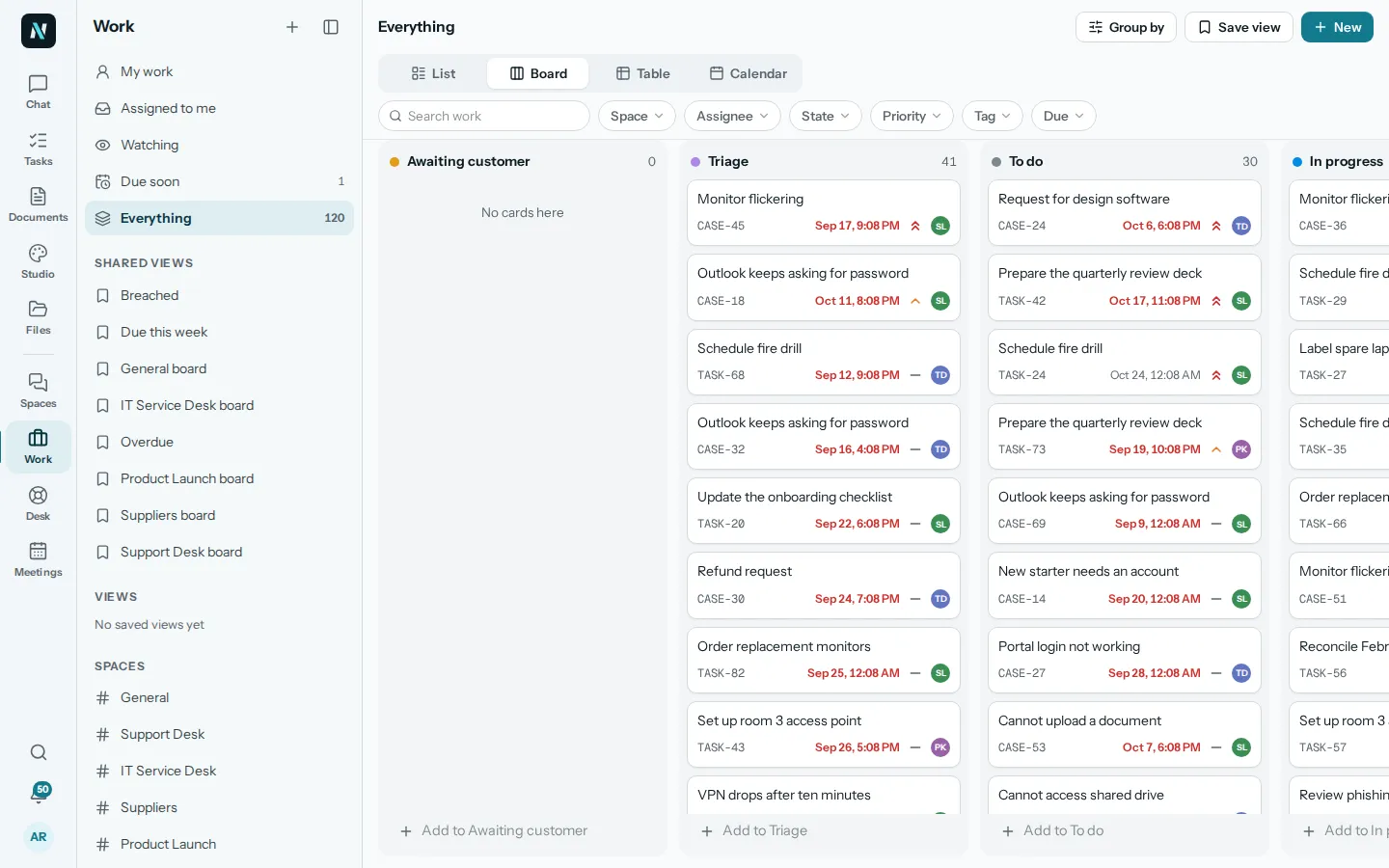
Initiatives: agree delivery times with the carrier, send tracking links at dispatch, ask for a review one week after delivery. Each initiative lives as a task with an owner in your task and project tool, and the key results are updated weekly. If the numbers do not move after a month, change the initiative, not the numbers.

Mistakes to avoid

  • Too many. Pick fewer and finish them.
  • Using OKRs as a to do list. They are about outcomes.
  • Tying them to pay. People will sandbag. Keep goals about learning and focus.
  • Setting and forgetting. If nobody opens the OKRs after week one, they are decoration.
  • Cascading everything from the top. In a small team, let the people who do the work help write the key results.
  • Changing the target halfway to look better. If the target was wrong, note it and say why.
  • Measuring people instead of the work. A number about a person invites fear. Measure the work and the customer.

Goals and key figures in nerix

nerix covers this in its Goals and figures place on Business workspaces, in the Quality group, next to Work. You add a goal in words, say how far ahead it looks (this year, several years, company or team), set a date, and place it under a bigger goal if there is one. Its status is Working on it, Reached or Dropped. A goal shows the key figures that measure it and "n% of the way there".

A key figure is what you measure, in a number, percent, money, days, hours or score, how often you look, which way is better, the target and who looks after it. Values come from three places: you type them in, they come from your records, or they come from a sheet. Starter sets are provided for customers, quality, people and safety, money and sales, and operations, and you can import a KPI sheet. A figure shows a chart, a plain reading, and whether it is on target, close or off target, and when it keeps missing it can open an action. nerix words these as goals and key figures rather than "objectives and key results", but the structure is the same: a goal in words, and numbers that measure it.

A figure is a number about the work, never a score of a person. The reading is a draft from the numbers, and the assistant does not invent values or targets. If you follow a standard such as ISO 9001, goals and measured results are also what an auditor asks for, as in our internal audit guide. See Work, Checks and Pricing.

Running the first quarter

For the first round, keep it small. In the first week, the team spends one hour choosing one objective and writing three key results with start values taken from real data. Put the page where everyone sees it, and give each key result one owner. In weeks two to twelve, hold the 15 minute check in at the same time each week and change the confidence level honestly. In week six, ask whether the initiatives are moving the numbers, and swap the ones that are not. In the final week, score the results, write down two things that worked and two that did not, and carry over only what still matters. After one quarter you will know whether your key results were measurable, whether the target was too soft or too hard, and what to do differently in the next round.

The short version

Choose one to three objectives for the quarter, each with two to four key results that measure an outcome, with a start and a target. Check in for fifteen minutes every week, with a confidence level, and review at the end of the quarter. Keep OKRs separate from pay and measure the work, not the person. Start with the OKR template and your own numbers.

Les questions qu’on nous pose

What does OKR stand for?
Objectives and Key Results. An objective says what you want to achieve, in plain words. Key results are the few numbers that show whether you got there.
How many OKRs should a small team have?
One to three objectives for a quarter, each with two to four key results. More than that and nothing gets enough attention.
Should OKRs be tied to pay or performance reviews?
Many teams keep them separate. When pay depends on hitting the number, people set safe targets and hide problems. Use OKRs to learn and focus, and talk about performance in other conversations.
What is the difference between an OKR and a KPI?
A KPI is a number you watch all the time to keep the business healthy, such as monthly cancellations. An OKR is a stretch for one period that you want to change, such as cutting cancellations by a third this quarter.

Partager ce guide

Modèles associés

Remplissez-en un en ligne et téléchargez-le en Word ou en PDF. Gratuit, sans compte, et ce que vous saisissez reste dans votre navigateur.

  • OKR (objectifs et résultats clés)

    Fixez des objectifs clairs avec des résultats clés mesurables, des responsables et des points de suivi, puis notez-les à la fin.

Dans nerix

Essayez-le sur votre propre travail.

nerix rédige le premier jet, répond à partir de vos documents en indiquant la page d’où vient chaque phrase, et réunit le travail de l’équipe au même endroit. Commencez avec l’offre gratuite.

Pour aller plus loin