At some point, a shared inbox stops working. Two people answer the same customer. Nobody answers another. A message sits for three days because everyone thought someone else had it. The fix is not a bigger inbox. It is a simple system in which every request has one owner, one status and one deadline.
This guide describes a way to run a help desk with two to ten people, without turning it into a department.
The signs it is time
You probably need a help desk if you recognise any of these:
- You ask in the team chat, "did anyone reply to this?"
- A customer writes twice because the first message went unanswered.
- You cannot say how many requests came in last week, or how long they took.
- The person who knows the answer is on holiday and nobody can see the history.
- Requests arrive by email, by phone, in chat and through a web form, and live in four places.
None of these needs a complicated tool. They need one list that everything lands in.
Principle one: one list, every channel
Every request, whatever way it arrives, becomes an item in one place. An email, a form on your website, a phone call someone writes up: all of them are requests with a requester, a subject and a description.
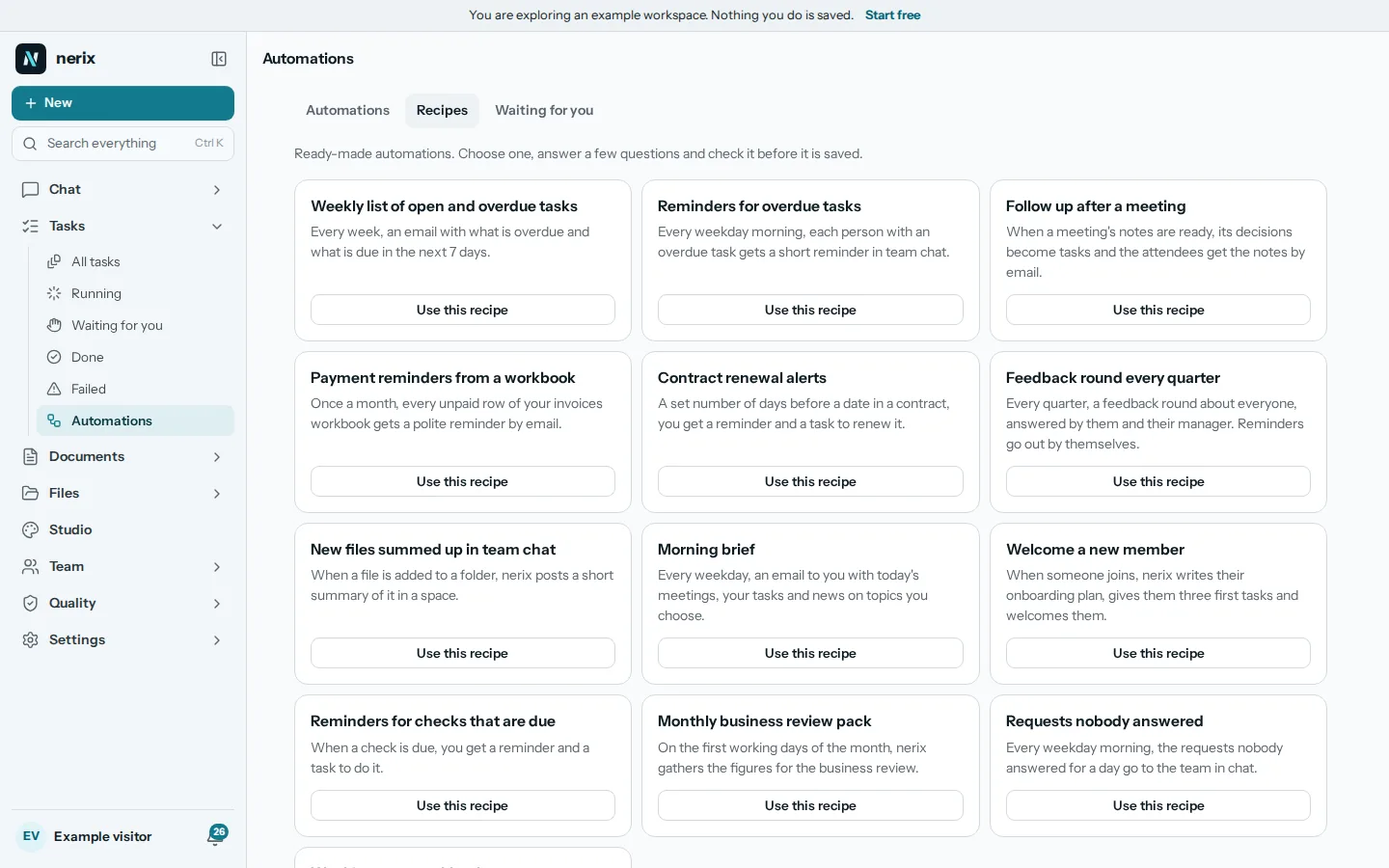
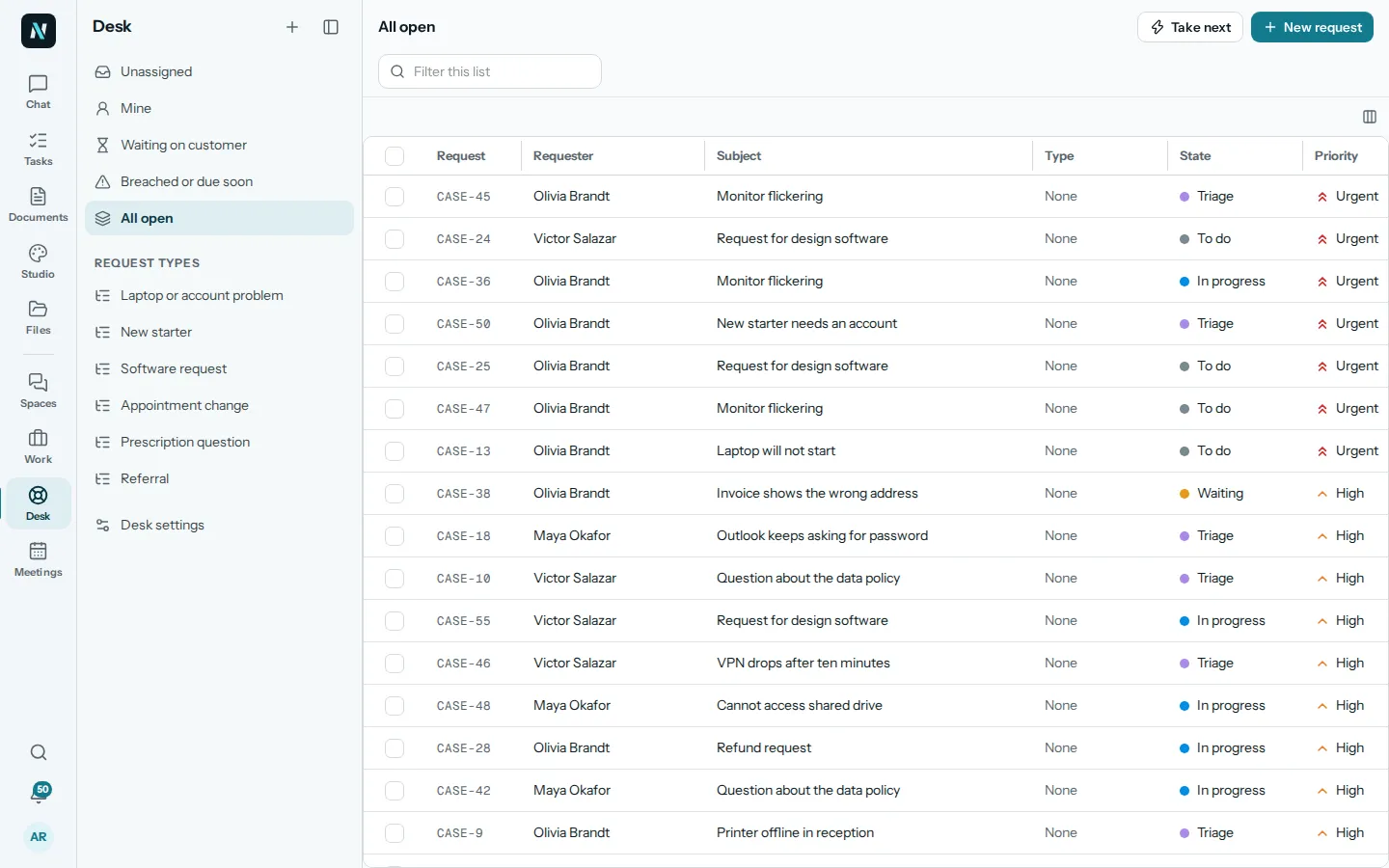
In nerix, the Desk is that list. Customers can write through a portal, a widget on your website or by email once those are set up, and if someone got in touch another way, you can add a request yourself with New request. Staff see all of them together, with lists for the ones that matter most: Unassigned, Mine, Waiting on customer, and Breached or due soon.
The channel matters less than the rule: if it is not in the list, it does not exist.
Principle two: every request has one owner
A request with two owners has none. When a request arrives, someone takes it, and their name goes on it. Everyone can see who, so nobody duplicates work and nobody assumes.
For a small team, a simple way to share the load is a "take next" habit: when you finish something, take the next unassigned request, oldest first. Desk has a Take next button for exactly this, which gives you the next unassigned request. It removes the cherry-picking that leaves the hard requests to age.
Ownership can move. If you are out, or the request needs someone else, hand it over, with a note saying why. The owner field should always answer the question "who is looking at this right now?"
Principle three: public replies and internal notes are different things
Support work involves two conversations: the one with the customer, and the one among the team about the customer. Mixing them is how an internal remark such as "this customer is difficult" ends up in an email.
Keep them separate. In Desk, a Public reply goes to the requester, and an Internal note stays with the team. Use notes freely: what you tried, what you found, who you asked. The next person who picks up the request, or you on a different day, will thank you.
When you need another person's input without bringing them into the customer's thread, a side conversation lets you ask them directly while the request stays in one place.
Principle four: say how fast you will reply, and keep the promise
Customers are more patient than you fear, if they know what to expect. Pick two targets and write them down:
- First reply: how soon every request gets a human answer. This does not need to be the solution, only an acknowledgement that someone is on it.
- Solution: how soon you aim to resolve a request, usually by priority.
Choose numbers you can meet on a normal week with your real team, including weekends and holidays. If you promise four hours and manage them one day in three, you have taught customers that your promises mean nothing. A longer target that you keep is worth far more.
Desk shows response targets on each request, First reply and Solution, and collects the ones that are late or close to late under Breached or due soon. Start your day there. If that list is empty, the day is going well.