Přeskočit na obsah

Organise business documents so you can find them

A simple system to organise business documents: naming, filing, versioning and searching, with rules a whole small team will actually follow.

Tým nerixuZveřejněno 5 min čtení

V tomto návodu

Every business drowns in documents: contracts, quotations, invoices, minutes, policies, certificates, drafts, copies of copies. The cost is not only the hour spent hunting for "the latest version". It is the wrong version sent to a client, the contract nobody can find when it renews, and the new colleague who cannot work out where anything is.

The cure is not a clever tool. It is a small set of rules that everyone follows, and you can set up a system in an afternoon so everyone can find your business documents.

Decide what counts and who owns it

Start by listing the kinds of documents you keep: customer contracts, quotations and offers, invoices and receipts, supplier documents, employee records, policies and procedures, meeting notes, marketing material, certificates and licences.

For each kind, name an owner: the person responsible for it being filed and up to date. Without an owner, nothing is filed.

Keep the folder structure small

Deep, clever trees fail, because people cannot remember where a document belongs. Use two or three levels at most, with the first level matching how you think about the business. For example:

  1. Customers
  2. Suppliers
  3. Finance
  4. People
  5. Policies and procedures
  6. Projects
  7. Marketing

Inside Customers, one folder per customer. Inside a customer folder, a short fixed set: Quotes, Contracts, Invoices, Correspondence. The same pattern everywhere means no one has to learn it twice.

When in doubt where something goes, pick the most likely folder and rely on search for the rest. Do not create a new top level folder for a single document.

Name files so they explain themselves

A good file name tells you what it is without opening it. A reliable pattern is date, who or what, and type, in that order:

  • 2026-03-14 Green Valley quotation 1182
  • 2026-04-02 Supplier contract Atlas Packaging
  • 2026-05-01 Staff handbook v3

Put the date first in the year, month, day format so files sort in order. Avoid "final", "final2" and "new". Avoid names that only make sense to the person who made them. Write numbers the way your invoices do.

Agree the pattern, write it on one page and put the page where people look.

Version without chaos

Drafts are where trouble starts. Rules that work:

  1. One live version. There is one current file, in one place. Others are marked as old or kept in a history.
  2. Version numbers in the name, or use a tool that keeps the history, so you can go back.
  3. Change notes. A line on what changed and who changed it.
  4. Signed means locked. Once a document is signed or sent, save it as a final copy and edit only a new version.
  5. Do not email edits around. When five people send back five versions, you have five problems. Use one shared copy.

Decide what is the "source" and what is the "output": the editable file and the PDF you send. Keep both, and name them the same.

Decide where it lives

The worst system is two places. Choose one home for each kind of document and say so. If the home is a shared drive, a document system or a library, everyone must know its name and have access. Avoid keeping business documents on personal laptops, in personal email or in chat messages only.

Set access carefully. Not everyone needs to see employee records or salary information. Give each group access to what they need, and review access when people join and leave.
Keep what you must, and only that

Write a short retention list: for each kind of document, how long you keep it and why. Tax records, payroll and some contracts have legal minimums that vary by country. Personal data should not be kept longer than you need it, and people may have rights to ask what you hold. Check the rules that apply to you, and ask your accountant.

Once a year, clear out what has passed its date, and note what you deleted.

Make search work

Search is only as good as what it can read. Scanned pages with no text, pictures of documents and badly named files are hard to find. When you scan, make the scan searchable, or store the text. Use consistent words, such as "quotation" rather than five different names for one thing.

Tags or short descriptions help for documents where the title does not say enough, such as a certificate with an obscure number.

Make it a habit

A system fails when it takes effort. Reduce the effort:

  • Provide templates with the right names and structure, so new files start right. Our meeting minutes template and invoice template are examples of documents that always have the same shape.
  • File at once, not "later". Later never comes.
  • Do a monthly ten minute tidy: what is in the downloads folder, the desktop and the inbox that should be filed?
  • Teach new hires on day one.
  • Appoint one person to keep the rules alive.

Where nerix helps

The library holds your documents in one place that you can search by meaning as well as by word, so "what did we agree about cancellation with Atlas?" finds the contract even if the word "cancellation" is not in the title. In the chat you can ask questions about your own documents and each answer shows the page it came from. That makes it easier to find the right clause, and to check it.

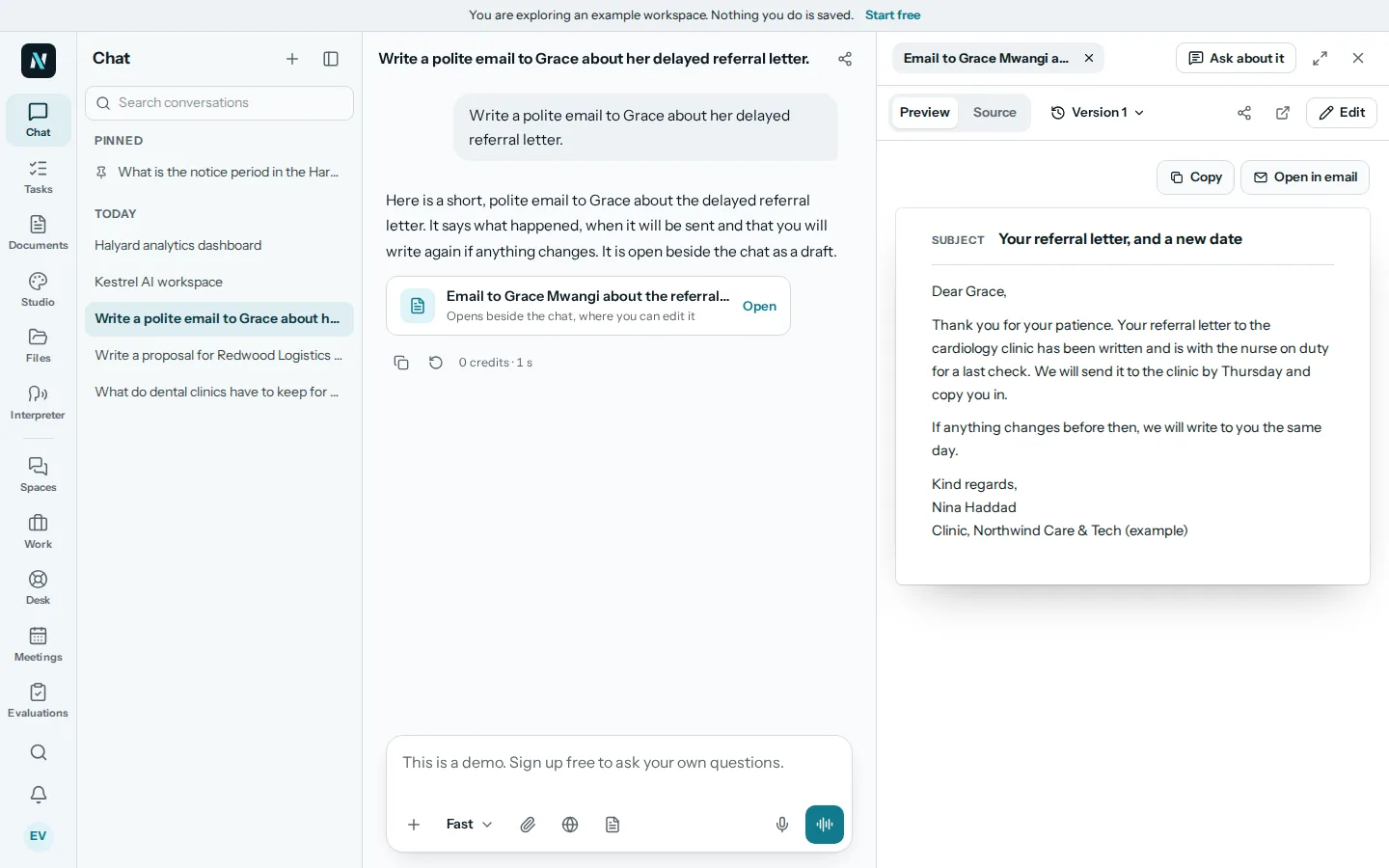
Documents nerix writes open beside the chat and keep every version, so you can go back. Numbers and prices can be worked on in the Sheet. nerix cannot decide what is important to keep or what the law requires; the rules and the naming still need to come from you.

The short version

List the kinds of documents and give each an owner. Keep folders few and the same everywhere. Name files by date, subject and type. Keep one live version, one home and short retention rules. File at once and tidy monthly.

Na co se lidé ptají

Should we organise by folder or just search?
Use both. A small set of clear folders gives people a map, and search finds the rest. Good names and a few agreed rules make both work.
How long should we keep business documents?
It depends on the type and on the law where you are, for example tax and employment records often have minimum periods. Check the rules for each kind, and write the answers in a short retention list.

Sdílet tento návod

Šablony k tomuto tématu

Vyplňte šablonu online a stáhněte si ji jako Word nebo PDF. Zdarma, bez účtu a to, co napíšete, zůstane ve vašem prohlížeči.

  • Zápis ze schůze

    Zaznamenejte, kdo se zúčastnil, co bylo rozhodnuto a kdo co udělá do kdy, připraveno k podpisu předsedajícího.

  • Faktura

    Vystavte klientovi přehlednou fakturu s položkami, daní, součtem, splatností a způsobem platby.

V nerixu

Vyzkoušejte to na vlastní práci.

nerix napíše první verzi, odpovídá z vašich dokumentů se stránkou, ze které každá věta pochází, a drží práci týmu na jednom místě. Začněte s bezplatným tarifem.

Čtěte dál