Hoppa till innehåll

Run a weekly planning meeting that works

A short, structured weekly planning meeting for small teams: what to review, how to set priorities, who owns what, and how to keep it under thirty minutes.

nerix-teametPublicerad 4 min läsning

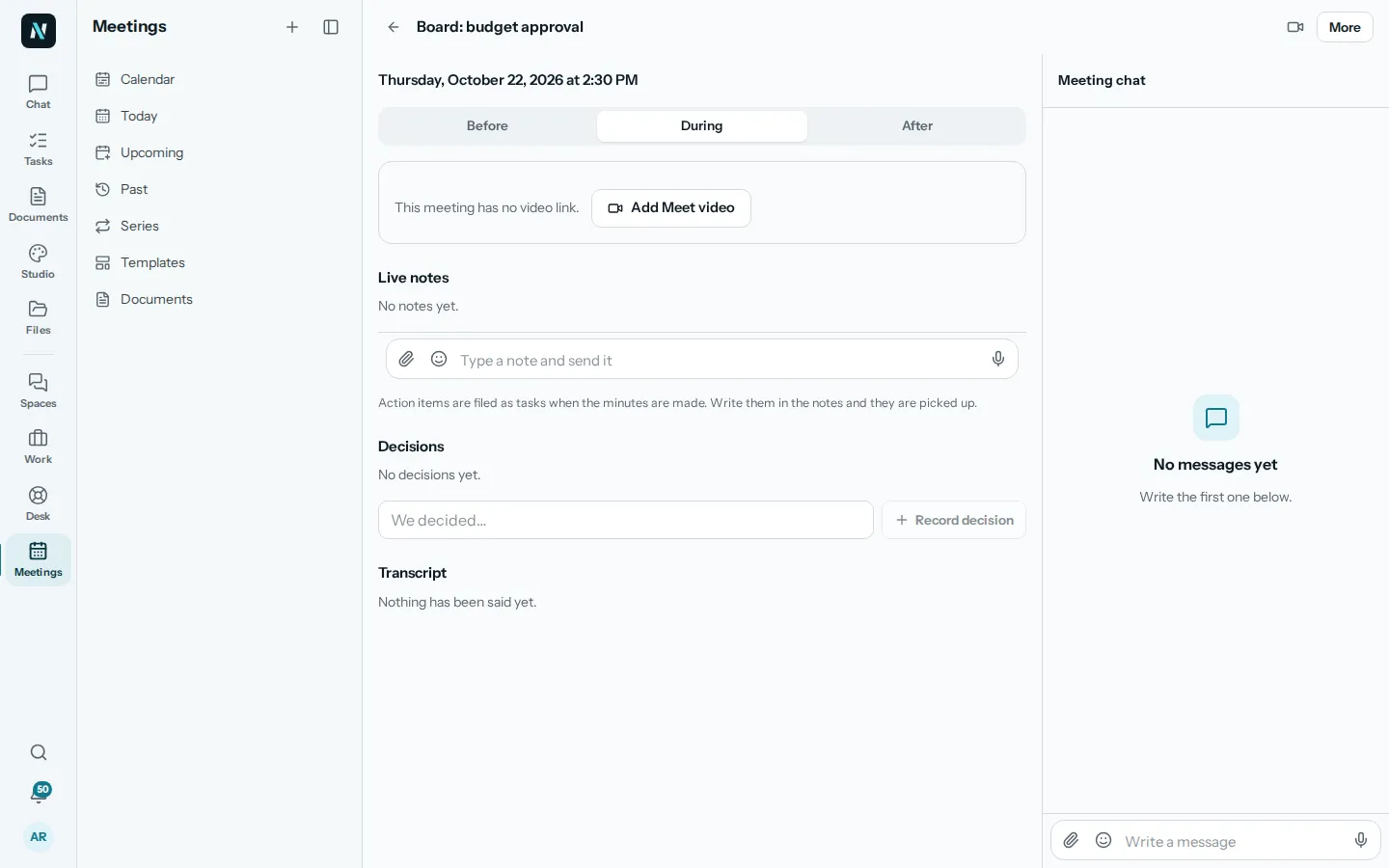
The During tab of an example meeting in nerix, with live notes, decisions and the transcript in one place.
I den här guiden

Many teams have a weekly meeting that nobody enjoys. It begins late, wanders and ends with the same unclear feeling it began with. Others have no meeting, and find out on Thursday that two people have been doing the same job while a third task nobody owns is late.

A short weekly planning meeting solves both. It gives the team a shared picture of the week, a clear set of priorities and an owner for each thing. Done well, it takes half an hour and saves many hours of confusion.

Decide the purpose

A weekly meeting is for coordination. It is not for long discussions, training or detailed status reports. Say what it covers: what we did, what we will do, what is blocking us and what we need to decide. Anything else gets its own time.

Keep the group to the people who work together this week. If half the room has nothing to say, consider splitting.

Keep the rhythm

Same day, same time, same length. Start on time even if someone is missing, and end on time. A room that runs over trains people to arrive late. Use a call link or a room that is always the same.

For remote teams, ask people to turn on their cameras if they are comfortable, but do not insist. What matters is that everyone can speak.

Prepare in five minutes

The person leading the meeting, who can rotate, looks at the list of tasks and projects before the meeting: what is due this week, what slipped, what is waiting. They write the agenda as a short list. Team members update their own tasks beforehand, so the meeting is not spent on "where are we with X?" questions that the list could answer.

A simple agenda for thirty minutes

  1. Wins and news (3 minutes). One good thing each, or one piece of news. It sets the tone.
  2. Last week (5 minutes). What was due, what is done, what is not and why.
  3. This week's priorities (10 minutes). The three to five things that matter most. Who owns each, what done looks like, what could stop it.
  4. Blockers and help (7 minutes). Who needs something from whom? Agree who will help and by when.
  5. Decisions (3 minutes). Anything that needs a yes or no now.
  6. Recap (2 minutes). Read back the actions.

If a topic needs more than a couple of minutes, write it down for a separate talk and move on. A "parking list" is the most useful tool a chair has.

Set few priorities

The week has limited hours. If you list twelve priorities, you have none. Ask: if only three things get done this week, which? Make them clear, with an owner each. Everything else is "if time allows".

Describe results, not activity. "Send the quotation to Green Valley" is clear. "Work on sales" is not.

Leave room for what is unplanned. Support requests and urgent jobs will arrive. A good rule is to plan around two thirds of the available time.

Name owners and dates

Every action has one owner, even if several people help, and a date. "We should update the price list" is not an action. "Dina updates the price list by Wednesday" is. Write them down during the meeting, in a place everyone can see.
Handle problems in the meeting without solving them there

When a blocker comes up, find out who can help and agree on when they will talk. Do not spend ten minutes of everyone's time fixing a problem for two people. Say "Sam and Lee, can you sort this out today? Report back tomorrow."

Keep notes short and shared

Take notes of decisions and actions only, and send them the same day. The follow up after a meeting template and the meeting minutes template give shapes you can use. Five lines are enough for a weekly meeting. The list of actions should live where the team works, so that it is looked at between meetings.

Start the next meeting with the last actions. If they are not done, ask why, without blame: was it unclear, too big or blocked?

Common mistakes

  • Status theatre. Everybody reads out what they did. Use the task list for that.
  • One person talks. The chair should draw others in.
  • No decisions. If it ends with "let us think about it", set a date to decide.
  • Too long. Shorten it before people stop coming.
  • Cancelling when busy. That is when you need it most.

Adapt as the team grows

Under five people, a ten minute stand up may be enough. With a larger team, ask each sub team to meet first and send one person to a short cross team meeting. Review the format every few months: ask the team what is useful and what is not, and change it.

Where nerix helps

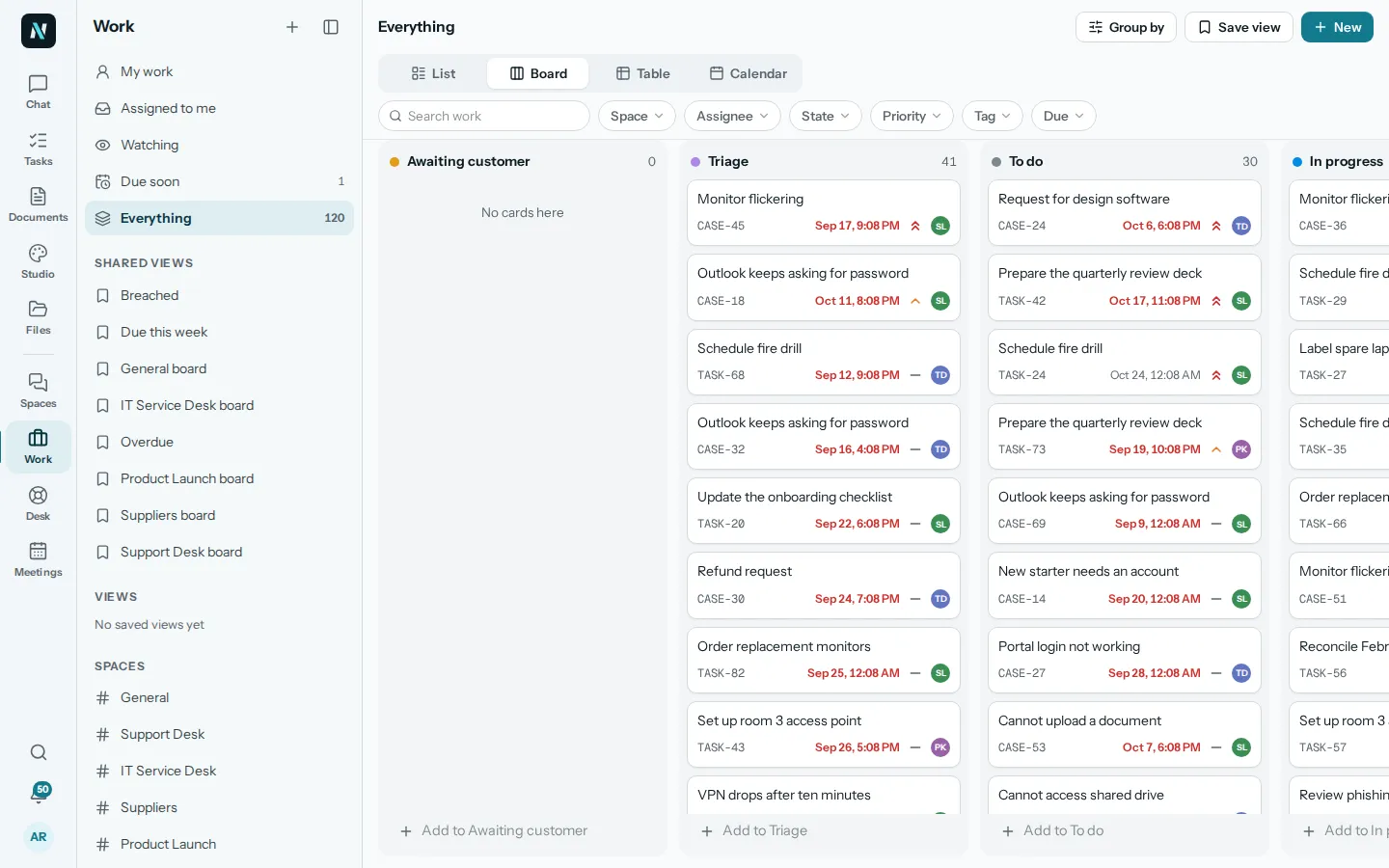
Keep the week's tasks in Work, where each has an owner and a due date and you can see the list, a board or a calendar, so preparation takes a minute. Post notes and questions in a Space, so the discussion that follows has a place.

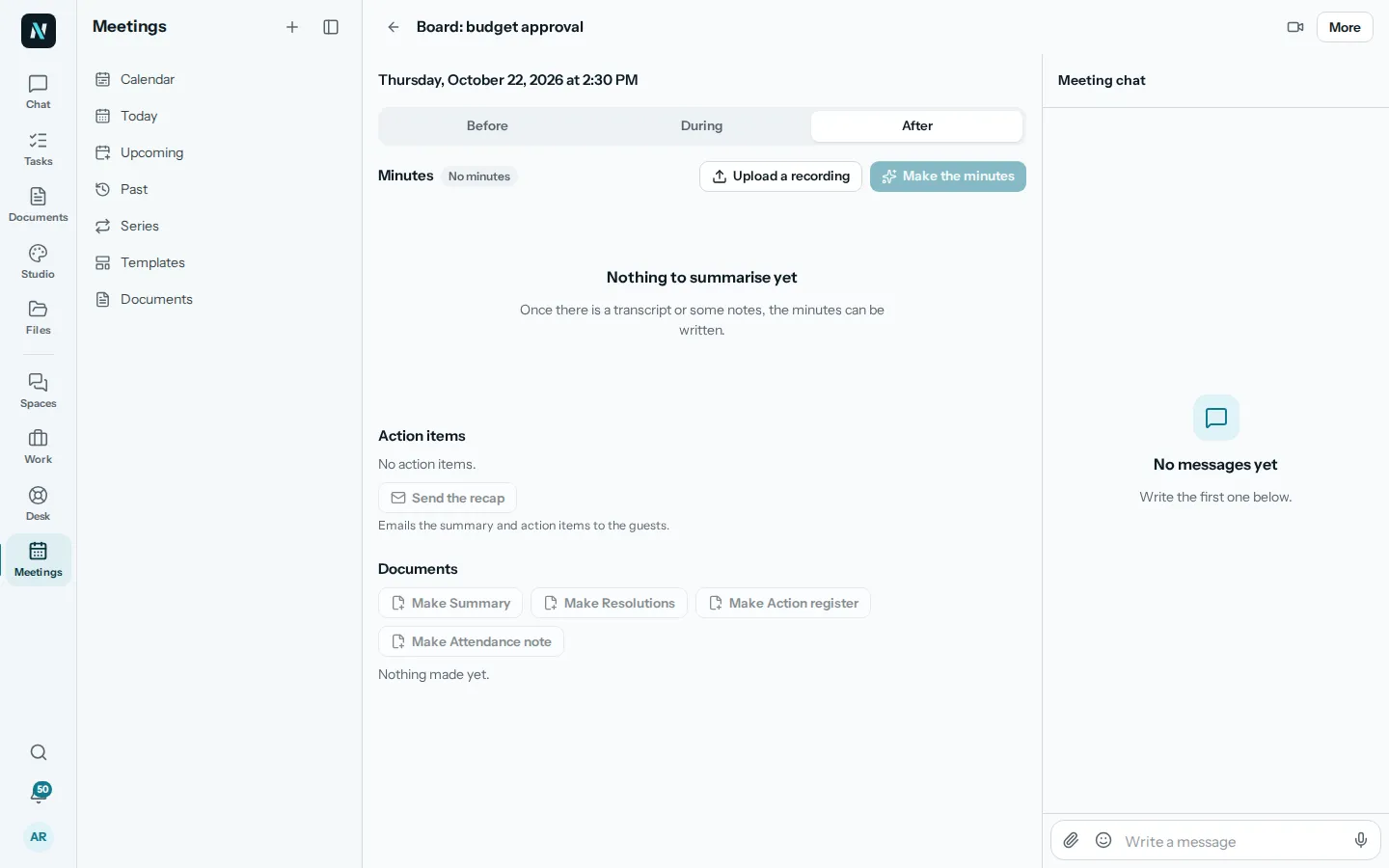
For meetings held in nerix Meetings, the notes can be turned into minutes with decisions and tasks, which keeps a written record without anyone typing it all. nerix can draft the summary, but check it before you share it, since it can miss context or mishear a name.

The short version

Same time every week, thirty minutes. Look at last week, choose three to five priorities with owners and dates, find blockers and decide what needs deciding. Park long discussions, write down actions and start the next meeting with them.

Frågor som människor ställer

How long should a weekly team meeting be?
Thirty minutes is enough for most small teams. If it regularly runs over, move discussions that involve only two or three people to a separate talk.
Should the meeting be at the start or the end of the week?
Start of the week works well for planning, and end of the week for review. Pick one and keep it. What matters is the habit.

Dela den här guiden

Mallar för detta

Fyll i en online och ladda ner den som Word eller PDF. Gratis, utan konto, och det du skriver stannar i din webbläsare.

  • Mötesprotokoll

    Anteckna vilka som deltog, vad som beslutades och vem som gör vad till när, redo för ordförandens underskrift.

  • Uppföljningsmejl efter ett möte

    Sammanfatta ett möte: vad ni kom överens om, vem som gör vad och när, samt nästa steg.

I nerix

Prova det på ditt eget arbete.

nerix skriver det första utkastet, svarar utifrån dina dokument med sidan som varje mening kommer från, och samlar teamets arbete på ett ställe. Börja med gratisabonnemanget.

Läs vidare