Siirry sisältöön

Run one to ones that people value

A simple structure for a regular one to one meeting between a manager and a team member: how often, what to ask, how to listen and how to follow up.

nerix-tiimiJulkaistu 5 min lukuaika

Tässä oppaassa

A one to one is a regular private conversation between a manager and one person on their team. It sounds ordinary, and that is the point: it is the cheapest way there is to keep a team healthy. Problems come up early, good ideas get heard, and the yearly review has no surprises because everything was said along the way.

Many managers skip them when they are busy, or hold them as status meetings where the person reads out a list. The difference between a useful one and a wasted one is mostly structure and attitude.

Make it regular

Fix a time and keep it. Weekly suits new people and busy periods; every two weeks suits most teams; monthly is the longest that still works. Use the same day and hour, so it becomes part of the week.

Cancelling a one to one sends a clear message about what is more important. If you must move it, move it, do not drop it, and say why.

Make it theirs

The person should come with items. Ask them to add topics before the meeting, in a shared note or list. Often the best use of the time is the thing they would not have raised in a group: a worry about a colleague, a question about the future, a frustration with a tool.

You have items too, but treat the first half as theirs. If you talk for most of the time, change your habit.

A simple structure

Here is a shape for a 30 minute one to one:

  1. How are you? (3 minutes) A real question. Listen to the answer, including what is not said.
  2. Their topics. (10 minutes) What do they want to discuss?
  3. Work and priorities. (7 minutes) What is going well? What is blocked? Is anything unclear?
  4. Feedback, both ways. (5 minutes) Something specific you noticed, and a question: "Is there anything I could do differently to help you?"
  5. Actions. (5 minutes) What will each of you do before next time?

Vary it. Every few meetings, spend a whole session on growth: what they want to learn, where they would like to be in a year, what would make the work more interesting.

Questions that open things up

  • What is the most important thing on your plate this week?
  • What is getting in your way?
  • What are you enjoying, and what are you not?
  • Where do you feel you are learning, and where not?
  • Is there something you think I do not know about?
  • If you were running this team, what would you change?
  • How is your workload, honestly?

Ask, then wait. Silence is not a failure. People often answer the real question after a pause.

Listen properly

Put away your phone and your laptop. Take a few notes, and tell them you are doing so. Repeat back what you heard: "So the late deliveries come from the supplier changing the schedule, and you have no way to see it earlier?" If you disagree, ask a question before you answer. If you cannot solve something, say so and say what you will find out.

Do not use the meeting only to check progress. Progress can be seen in the work. Use the time for what cannot be seen there.

Give feedback in small pieces

Say what you noticed soon after it happened, specifically and kindly. "In the client call yesterday you explained the delay clearly and calmly, and the client relaxed" is feedback a person can repeat. If something needs to change, say it plainly and offer help. Save only the big topics, such as pay or a serious problem, for their own conversations.
Keep a short record

After the meeting, note the actions in two or three lines: who does what by when. Share the note, so you both have the same version. Our follow up after a meeting template and the meeting minutes template give formats. Do not write a transcript. Notes that run to pages will not be read.

Before the next meeting, read the last note. Starting with "Last time you said you wanted to learn the invoicing system, how is that going?" shows the person that they were heard.

Do what you said

The quickest way to ruin one to ones is to promise things and not do them. Keep your actions small and finish them. When you cannot do something, tell them why. People can accept a no. They cannot accept silence.

Adapt to the person

New people need more structure and more frequent talks. Experienced people may want fewer and more strategic ones. Remote workers need the time more, because you do not meet in the corridor. Some people open up on a walk or in a call without video; others prefer writing. Ask how they would like to do it.

Common mistakes

  • Status reports. If it is a list of tasks, send it by message and use the time for something else.
  • Cancelling. Every cancellation is a message.
  • Talking too much. Aim for the person speaking most of the time.
  • Using it only for problems. Include praise and plans.
  • No follow up. If nothing happens between meetings, people stop bringing things.

Where nerix helps

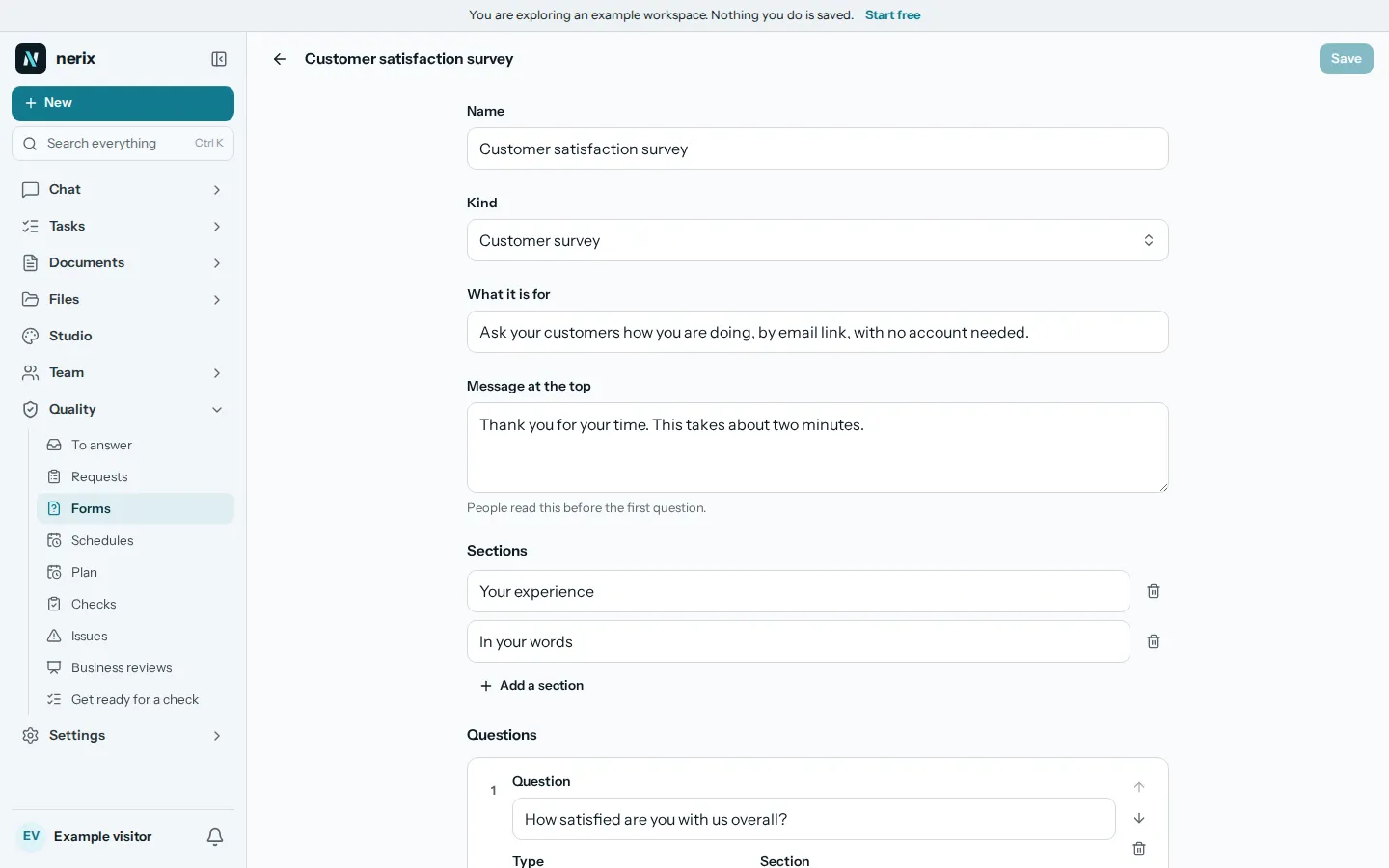
Keep tasks that come out of one to ones in Work, with an owner and a due date, so nothing depends on memory. In Feedback (early access) a monthly one to one form and a weekly check in are among the twelve starting forms, which you can copy and change. People can fill in a few questions before the meeting, and you read the answers beforehand.

If you hold meetings in nerix, notes can be captured and turned into minutes and tasks. You decide what is kept, and a private talk should stay private. In the chat, nerix can help you shape a list of questions for a person in a particular situation.

The short version

Hold them on a fixed rhythm, and make them the person's meeting. Use a simple structure, ask open questions and listen. Give small, specific feedback, write two or three lines of actions and do what you promised.

Ihmisten kysymyksiä

How long should a one to one be?
Thirty minutes is enough for most teams. Fifteen can work for a weekly check in. Make the time regular and protect it from being moved.
Whose meeting is it?
The employee's. The manager listens more than they talk, and the employee chooses much of what is discussed.

Jaa tämä opas

Mallipohjat tähän

Täytä ne verkossa ja lataa Word- tai PDF-tiedostona. Ilmaiseksi, ilman tiliä, ja kirjoittamasi pysyy selaimessasi.

  • Kokouksen seurantaviesti

    Tee yhteenveto kokouksesta: mitä sovittiin, kuka tekee mitä ja mihin mennessä, sekä seuraava askel.

  • Kokouspöytäkirja

    Kirjaa, ketkä osallistuivat, mitä päätettiin ja kuka tekee mitä mihin mennessä, valmiina puheenjohtajan allekirjoitettavaksi.

nerixissä

Kokeile omassa työssäsi.

nerix kirjoittaa ensimmäisen luonnoksen, vastaa asiakirjoistasi ja kertoo, miltä sivulta kukin virke on peräisin, sekä pitää tiimin työt yhdessä paikassa. Aloita ilmaisella paketilla.

Lue lisää