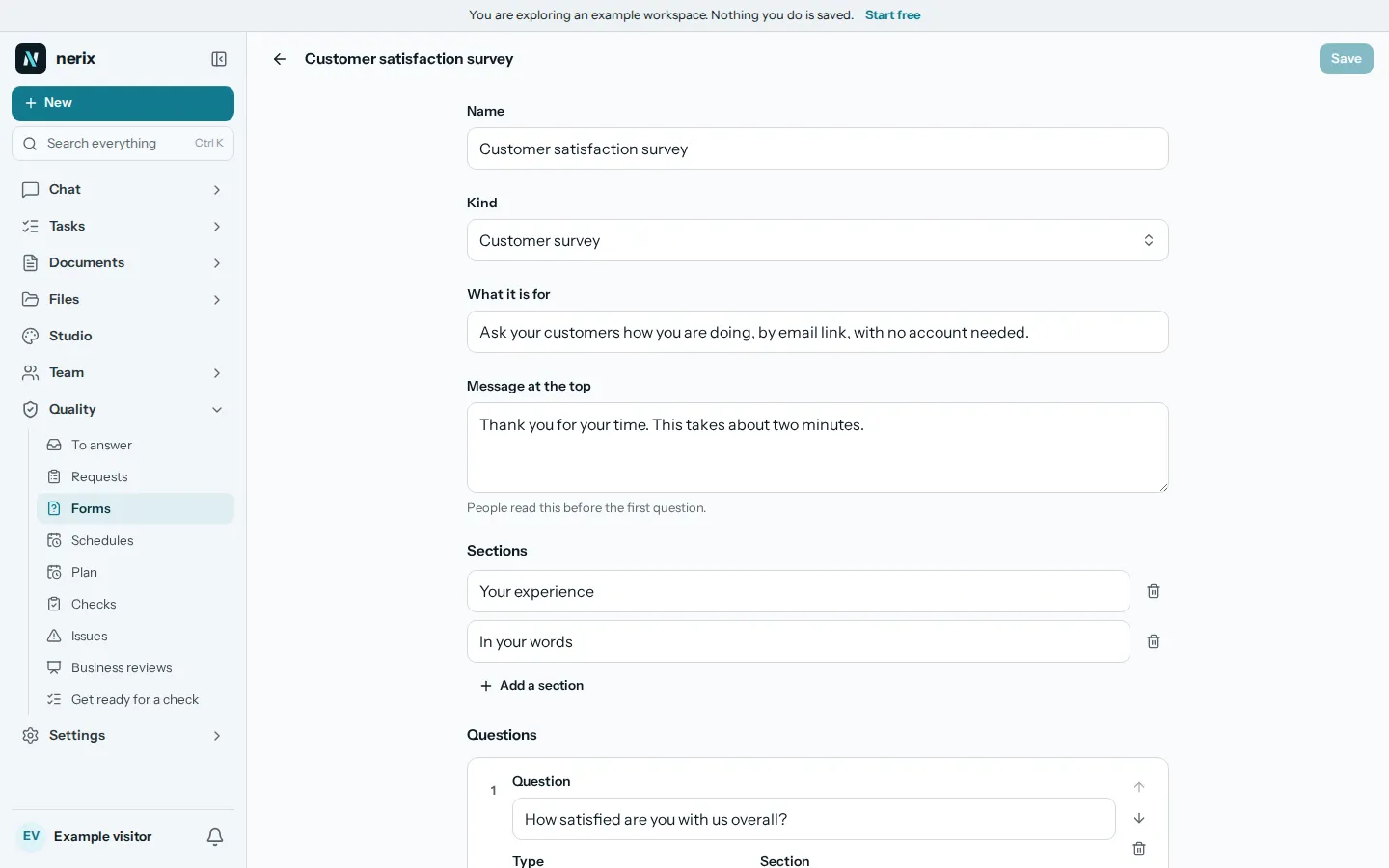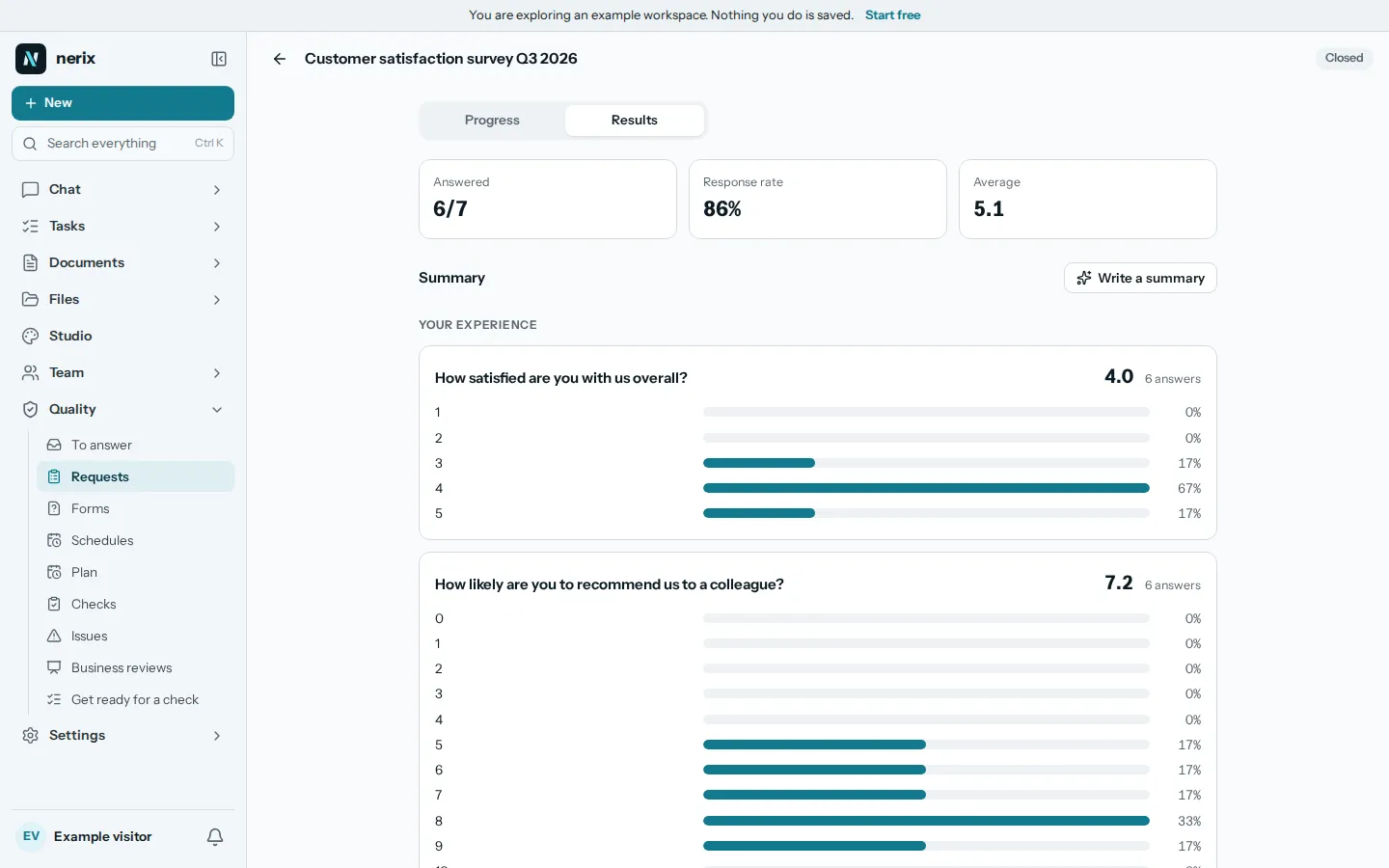
If you ask your team how things are and get "fine, thanks", you have learned very little. People protect themselves. They worry that honesty will cost them, or that nothing will change, so they say what is safe. An anonymous survey can open that door, but only if people believe it is anonymous, the questions are good and something happens afterwards.
This guide covers each of those three, with attention to the problems of small teams, where anonymity is fragile.
Decide what you want to learn
A survey with no purpose becomes a pile of numbers. Choose one topic: how people feel about workload, how well the team communicates, how meetings are going, how new people are welcomed, what gets in the way. Write the decision it will inform. "We will use this to decide whether to change how we plan the week."
Keep it short. Five to ten questions that take five minutes get more answers and more honest ones than forty questions that take half an hour.
Write questions people can answer
A few rules make a big difference.
- One question, one idea. "Are our meetings useful and well organised?" asks two things. Split it.
- Concrete over abstract. "In the last month, how often did you leave a meeting unsure what to do next?" beats "How is communication?".
- Balanced scales with labels. A rating from 1 to 5 where each end is named ("never" to "always") is easier to answer than a bare number.
- Not leading. "How great was the new schedule?" invites a polite yes. "How has the new schedule changed your week?" invites a truthful one.
- A few open questions. "What is one thing we should stop doing?" and "What is one thing we should keep?" give you the reasons behind the numbers.
- A way out. Let people skip any question. Forced answers get false ones.
Ask about things the team can change. A question on pay may be fine, but only if you are willing to talk about it.
Make anonymity real
People can tell when anonymity is a promise and when it is a design. For it to be real:
- Do not collect names, emails or any detail that identifies the person. Be careful with questions on role, team, age or length of service: the answers together can point to one person.
- Do not show results until enough people have answered. A threshold of three answers is a minimum; a larger team can use more.
- Do not split results by group unless every group is big enough. A result for "the two people in design" is not anonymous.
- Read open answers with care. A comment that mentions a specific event can reveal its writer. You can group comments into themes rather than quoting every one.
- Never try to find out who wrote something. Ever. If you do, the next survey will be worthless.
Say all of this at the start, in plain words: who sees what, what is collected, when results are shown. And keep the promise.
For a very small team, consider whether a survey is the right tool. With five people, a conversation in a trusted setting, or a facilitated one, may do more than a form.
Timing and sending
Pick a moment that is not the busiest week. Give people at least a week to answer, and a reminder in the middle. Tell the team why you are asking, how long it takes and when they will see results. Reminders go to everyone who has not answered, without saying who that is.
Do not ask people to complete the survey while a manager stands nearby. Let them do it on their own time, within working hours.